
What a Burnt Bible and a Stranger’s Tears Taught Me About Freedom
As a church volunteer and writer for this year’s Missions Month, my assignment brought me directly into our church prayer room. The space has been transformed into a global prayer sanctuary, filled with maps, missions, and displays highlighting the persecuted church worldwide. I am looking over manuscripts and display pieces, when my eyes locked onto a chilling artifact: a partially burnt Bible, its charred pages a silent witness to a hatred I have never had to face.
In the Philippines, we take our safety for granted. We open our crisp, clean Bibles in well-lit rooms, completely free from fear, sometimes even with a cup of hot tea. But that scorched scripture served as a stark reminder that for millions of believers globally, faith is a matter of life and death.
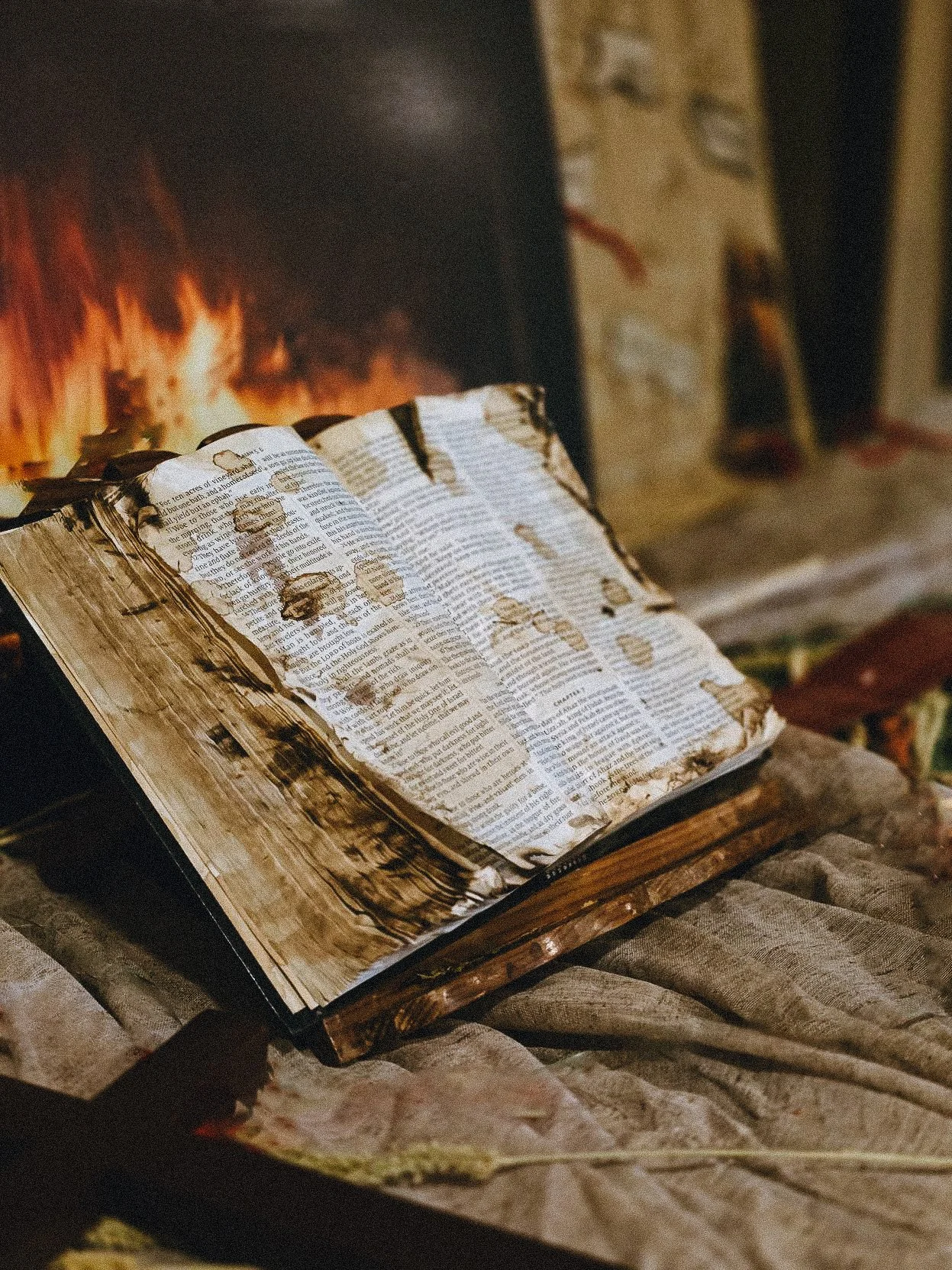
Charred Bible in the Prayer Room
As I sat there processing this contrast, a living testimony walked through the door.
Her eyes immediately locked onto the manuscripts and the blackened pages of the burnt Bible. She went into one of the prayer rooms and left. Then I saw the same lady on the ground floor of our church and approached her. She shared a raw, firsthand account that instantly bridged the gap between our peaceful church grounds and the brutal reality of global persecution. Before moving to the Philippines, she lived that reality as a devout Hindu.
Her journey began in a volatile, impoverished slum area in her homeland, where she volunteered to feed malnourished children. One week, a team of Christian missionaries arrived at the outreach site, bringing a message she had never encountered before: the Gospel of Jesus Christ.
"I felt something in my heart that I had never felt before," she whispered in tears.
For seven days, she secretly returned to the missionaries, drinking in every word of scripture despite the immense dangers. In her home country, choosing Christ carries a devastating price tag—immediate family rejection, violent community backlash, or imprisonment. The threat of her own life turning into a story like the charred Bible on the table was terrifyingly real. Yet, drawn by a grace she couldn't explain, she kept coming back.
Seeking a fresh start to pursue her studies, she eventually moved to the Philippines. It was here, protected by our nation's laws on religious liberty, that her hidden faith was finally allowed to bloom. Out on our bright lobby grounds, she could walk without looking over her shoulder. In our sanctuary, she could open a Bible without fear. Here, she came to fully know Jesus and surrendered her life completely to Him.
Standing beside her, the contrast was overwhelming. While we enjoy our bright, sunny freedom, millions of our brothers and sisters worldwide are actively fleeing fires, hiding in windowless basements, and memorizing fragments of smuggled scriptures just to keep the faith alive. They risk their lives for a single page of the Word, while our own Bibles often sit gathering dust on our shelves.
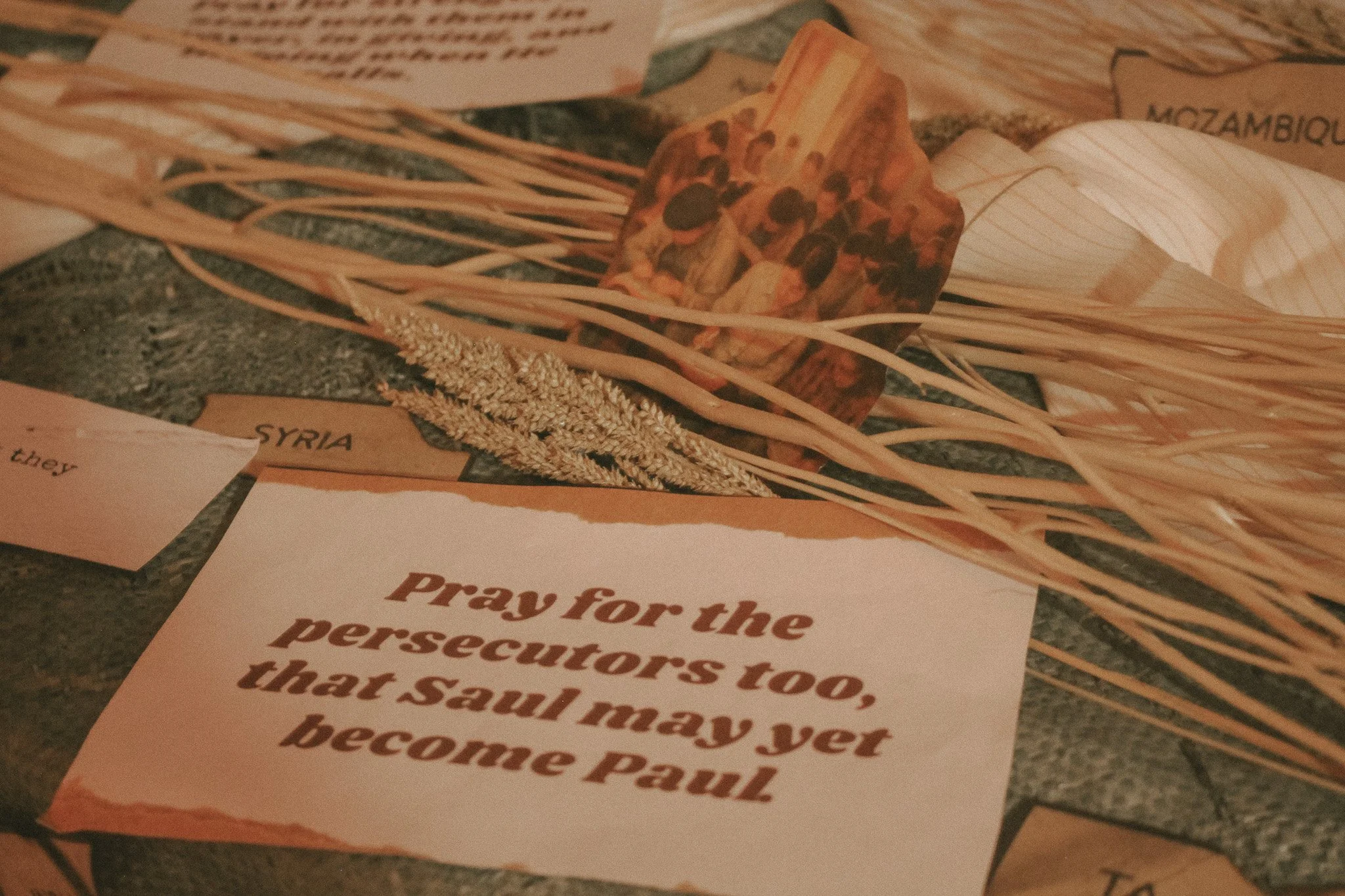
This encounter completely transformed my perspective as a writer and a volunteer. The freedom we enjoy in the Philippines is not a global standard; it is a profound privilege and a heavy stewardship. Every uncharred page we freely turn, every corporate worship song we sing aloud, and every prayer we whisper in public is a luxury denied to believers in dozens of nations.
This Missions Month, let us look at our prayer room displays not as distant tragedies, but as urgent family matters. Let us intercede fiercely for our persecuted global family. May we honor their dangerous perseverance by shaking off our own spiritual complacency—worshiping loudly, giving generously, and living each day with radical, active gratitude.
Written by:
Camille Vee
CCF Beyond Volunteer